Case Study: Product Design AI-Generated Product Photo App
Role: Product Designer
Year: 2022
Project Overview
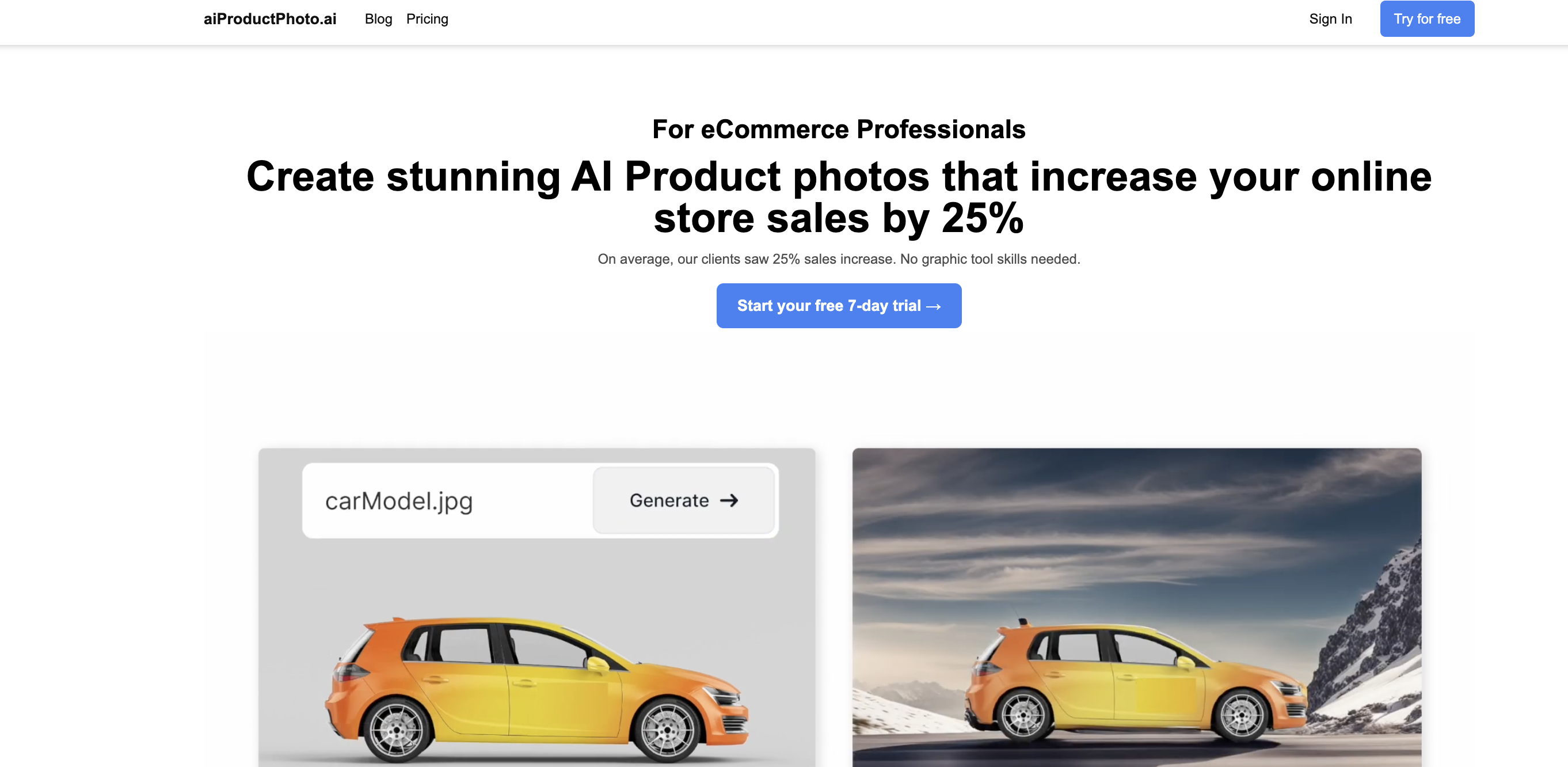
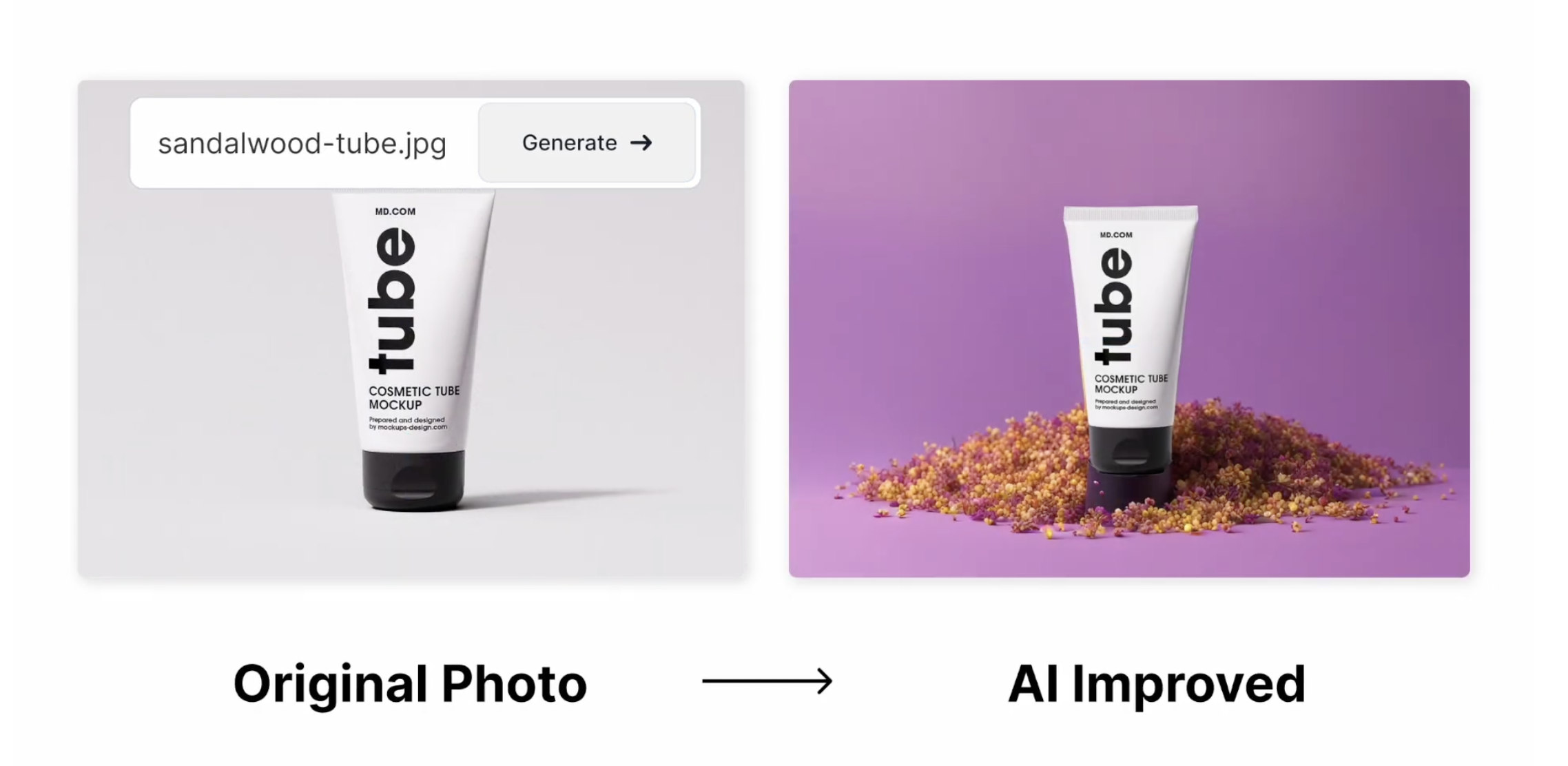
This project focused on designing a beta version of an AI-powered product photo generation app aimed at eCommerce sellers. The app empowered users to create professional-quality product images through pre-designed templates and custom AI-generated prompts. The core objective was to deliver an intuitive UX/UI that reduced user frustration, validated market demand, and encouraged trial-to-paid conversion through a guided, user-centered experience.
Project Overview
As the Product Designer, I led the UX/UI design efforts from concept to beta launch. The main goal was to simplify the complex AI interaction for non-technical users and create a frictionless onboarding experience. My responsibility included designing user journeys, high-fidelity interfaces, and a scalable design system for both web and mobile platforms.
Challenges & Initial Observations
Low Prompt Usability:
- The first version of the app only allowed custom AI-generated prompts, but users struggled to write effective prompts.
- Poorly written inputs resulted in low-quality image outputs, reducing user satisfaction and retention.
Engagement & Retention Issues:
- Only 1% of trial users converted to the paid plan, signaling a need for better onboarding and guidance.
- High subscription cancellation rates suggested that users were unsure of the app’s long-term value.
Paid Acquisition Efficiency:
- Google Ads successfully drove signups, but the 4% conversion rate from ad clicks to signups was not translating into paid retention.
UX UI Product design
To ensure efficient execution, I led the project using an Agile methodology, focusing on structured sprints and iterative improvements.Agile Process & Sprint Structure
- Sprint Planning: Defined Epics (e.g., "Guided Prompt Optimization", "Template-Based UX Enhancements") and created actionable Jira tickets.
- User Story Development: Prioritized key user journeys, ensuring that features addressed core pain points.
- Backlog Grooming: Regularly refined backlog priorities based on user feedback and data insights.
- Development & QA Sprints: Ensured bi-weekly releases, allowing continuous iteration.
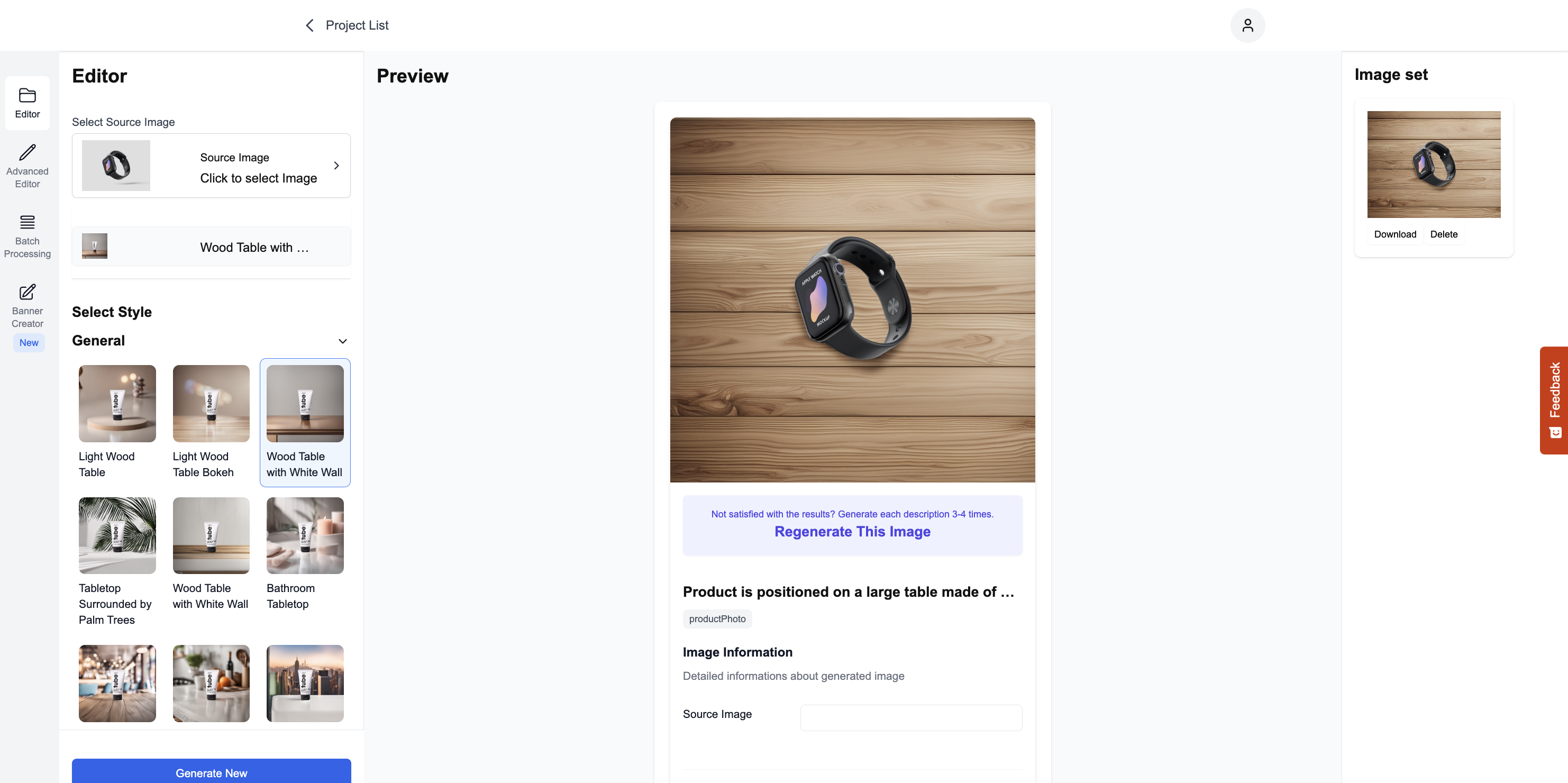
Solution: Improving User Experience Through Structured Guidance; Adding Template-Based AI Generation:
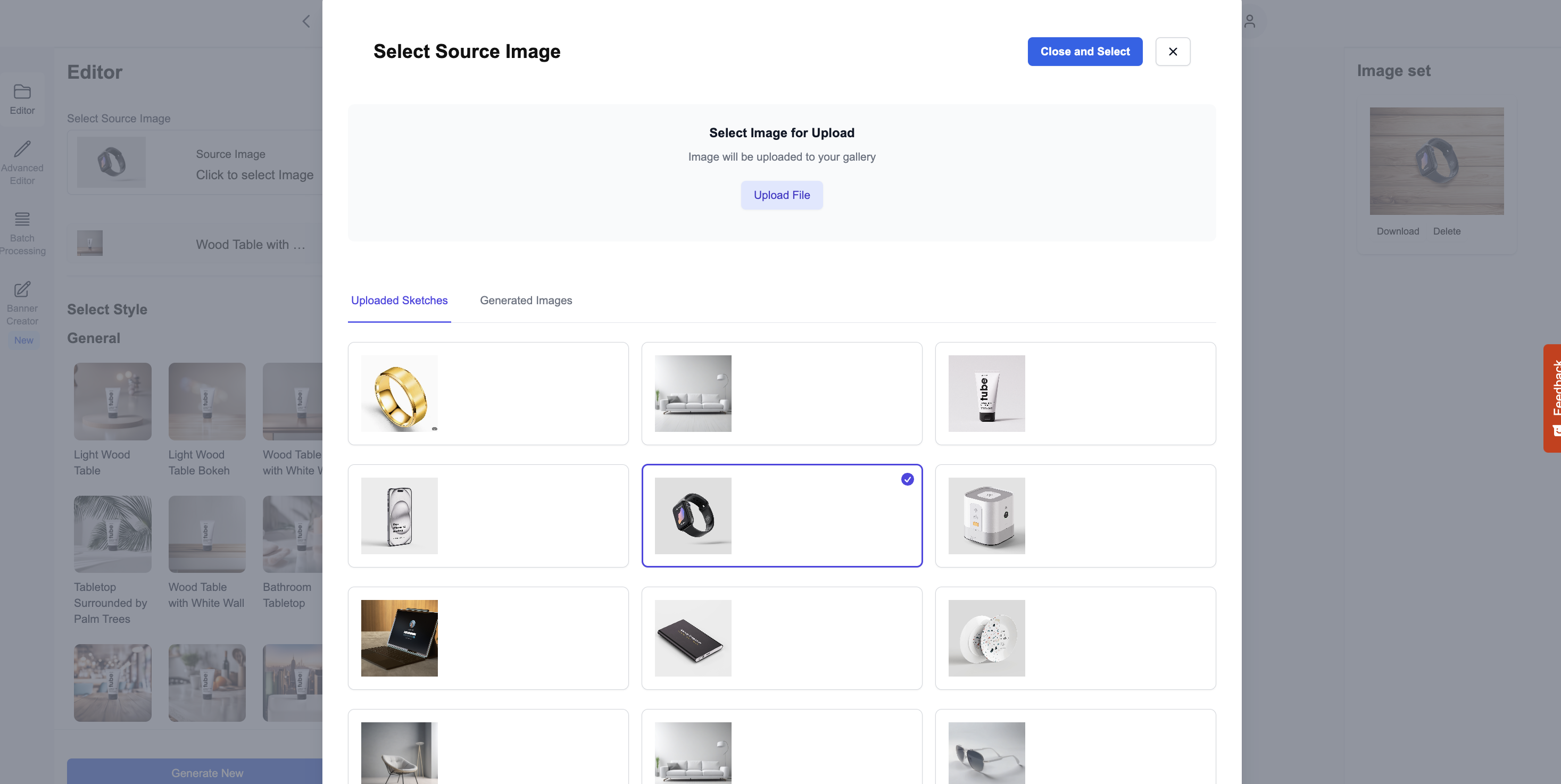
- Introduced pre-built templates for product categories (watches, perfumes, electronics) to eliminate guesswork for users.
- Outcome: Enabled faster and more accurate image generation, significantly improving user success rates.
Implementing Guided Prompts for Custom Input:
- Added a real-time guided prompt assistant, providing users with suggestions while typing.
- Outcome: 80% of users successfully generated usable images, compared to almost none before.
Refining UI & User Flow:
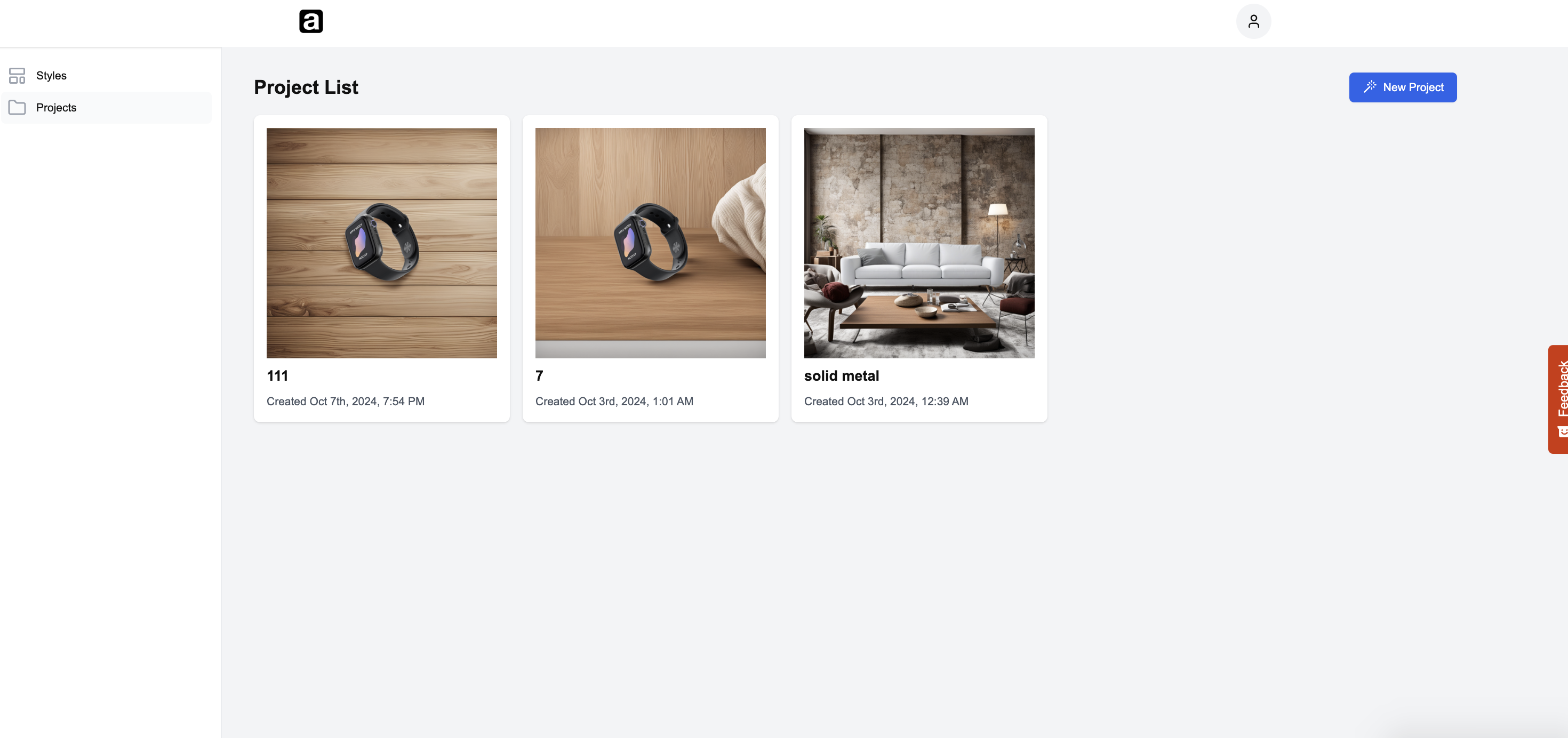
- Improved navigation and feature visibility, ensuring that advanced settings were clearly discoverable from the start.
- Outcome: Reduced user frustration and confusion, increasing engagement time in the app.
User Testing & Data-Driven Iteration
Research & Testing Approach:
- User Interviews: Conducted structured feedback sessions with early users to identify UX pain points.
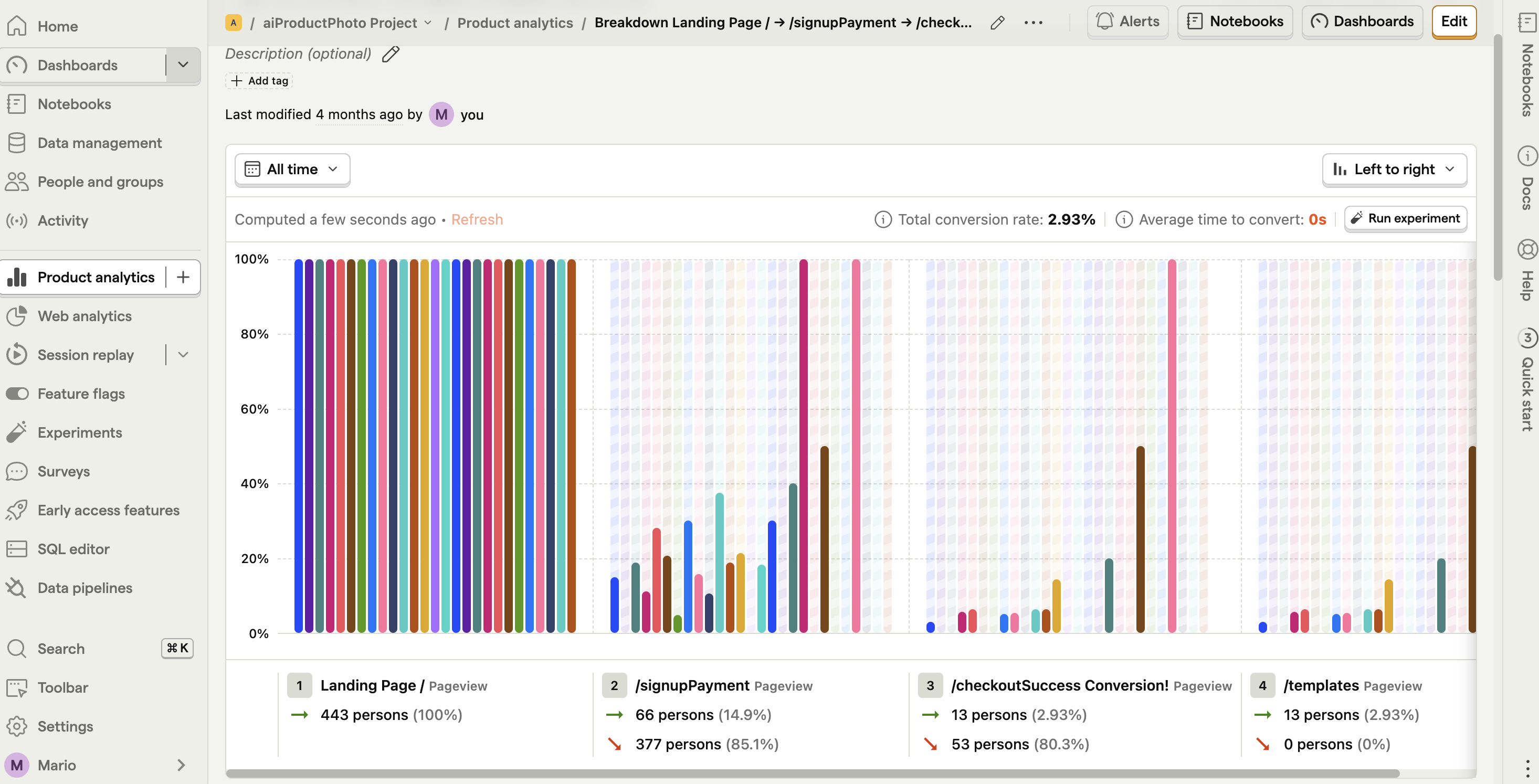
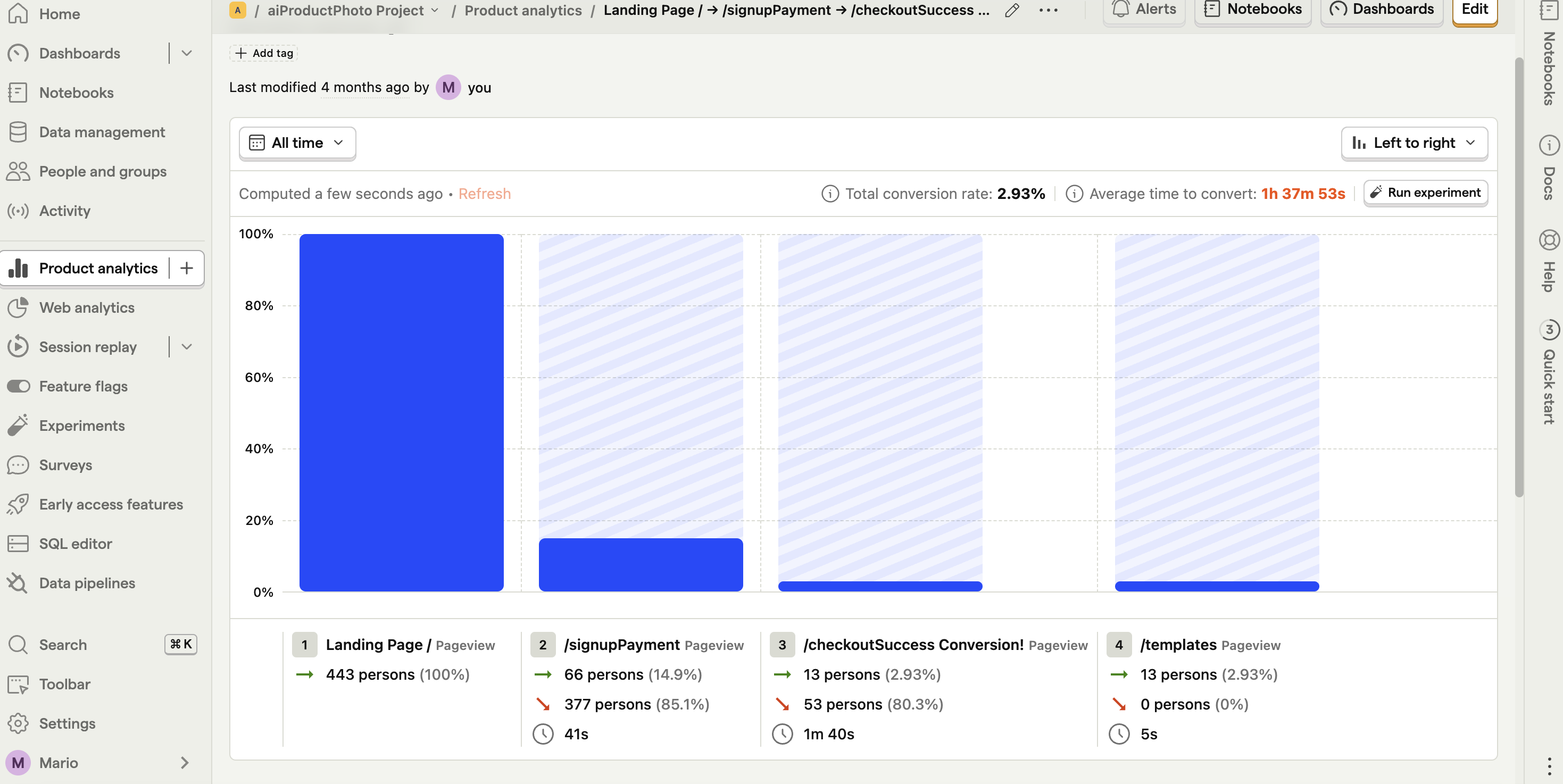
- Behavioral Analytics (PostHog): Set up event tracking for each user journey, monitoring drop-off points and feature adoption rates.
- A/B Testing: Compared before and after engagement rates with templates vs. custom prompts.
Live Testing & Iteration:
- Outcome: Post-launch analysis showed that the new guidance systems significantly improved initial user satisfaction, though retention beyond the free trial remained a challenge.
Methods
- User Research & Insights: Conducted in-depth user interviews and usability testing to uncover pain points, such as ineffective prompt creation and confusion during onboarding.
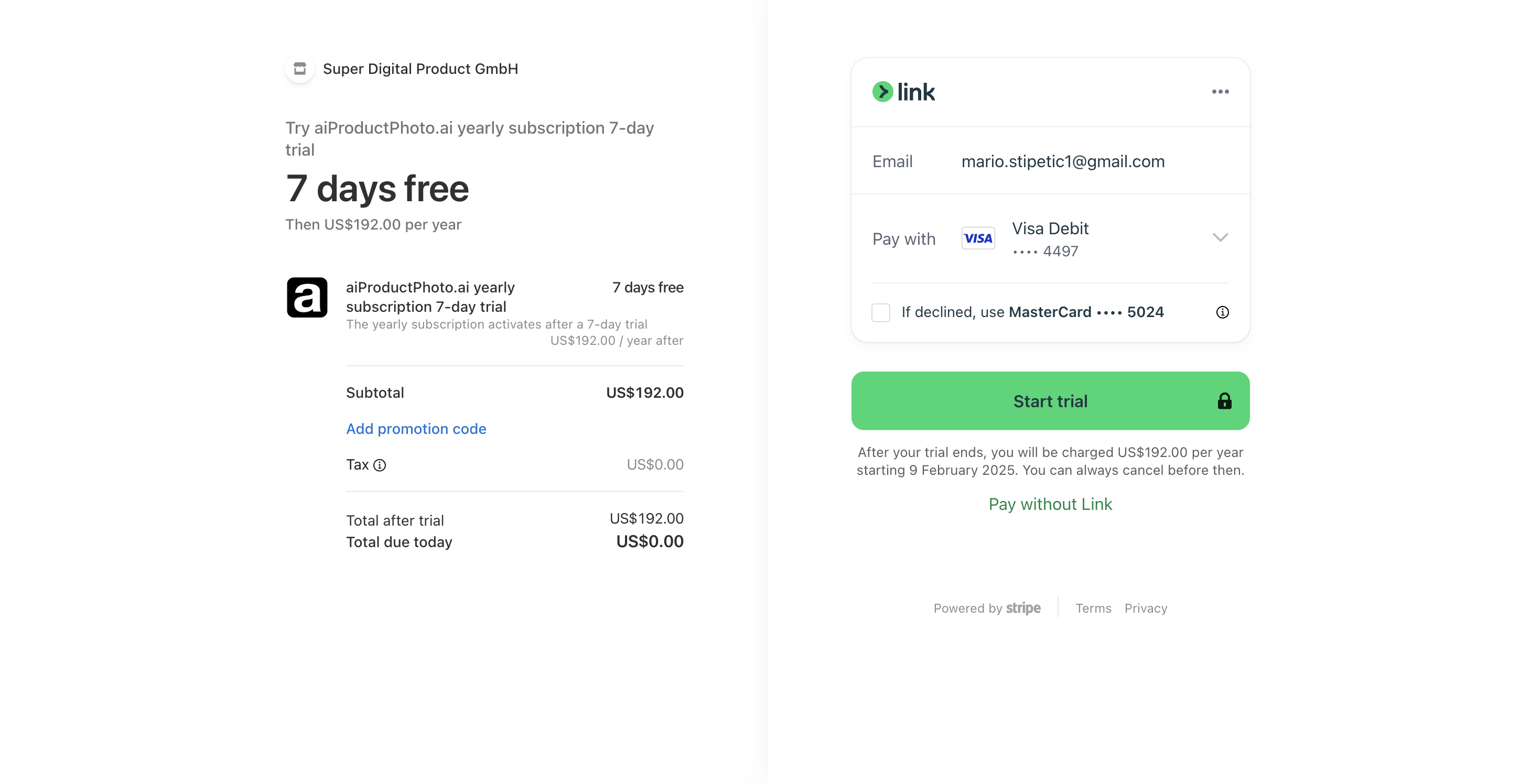
- UX Design: Developed wireframes and interaction flows focused on clarity and user guidance. Designed key user journeys for onboarding, template selection, AI prompt entry, and payment flows.
- UI Design: Created a modern, minimalistic UI aligned with SaaS best practices, ensuring accessibility and a sense of professionalism.
- Design System Development: Built reusable components, typography scales, color palettes, and interaction patterns in Figma to maintain visual consistency across all screens.
- Prototyping: Delivered interactive Figma prototypes for stakeholder reviews and early user testing, allowing rapid iterations.
- Collaboration: Worked closely with developers to ensure pixel-perfect implementation and optimized handoff using advanced Figma features and developer-friendly specifications.
Solutions
- Template-Based AI Generation: Designed a library of pre-built templates for common product categories (e.g., cosmetics, watches, electronics). This reduced user dependency on writing complex AI prompts and increased success rates for image generation.
- Guided Prompt Assistance: Designed a real-time prompt helper UI that offered live suggestions and sample inputs as users typed, drastically improving prompt effectiveness.
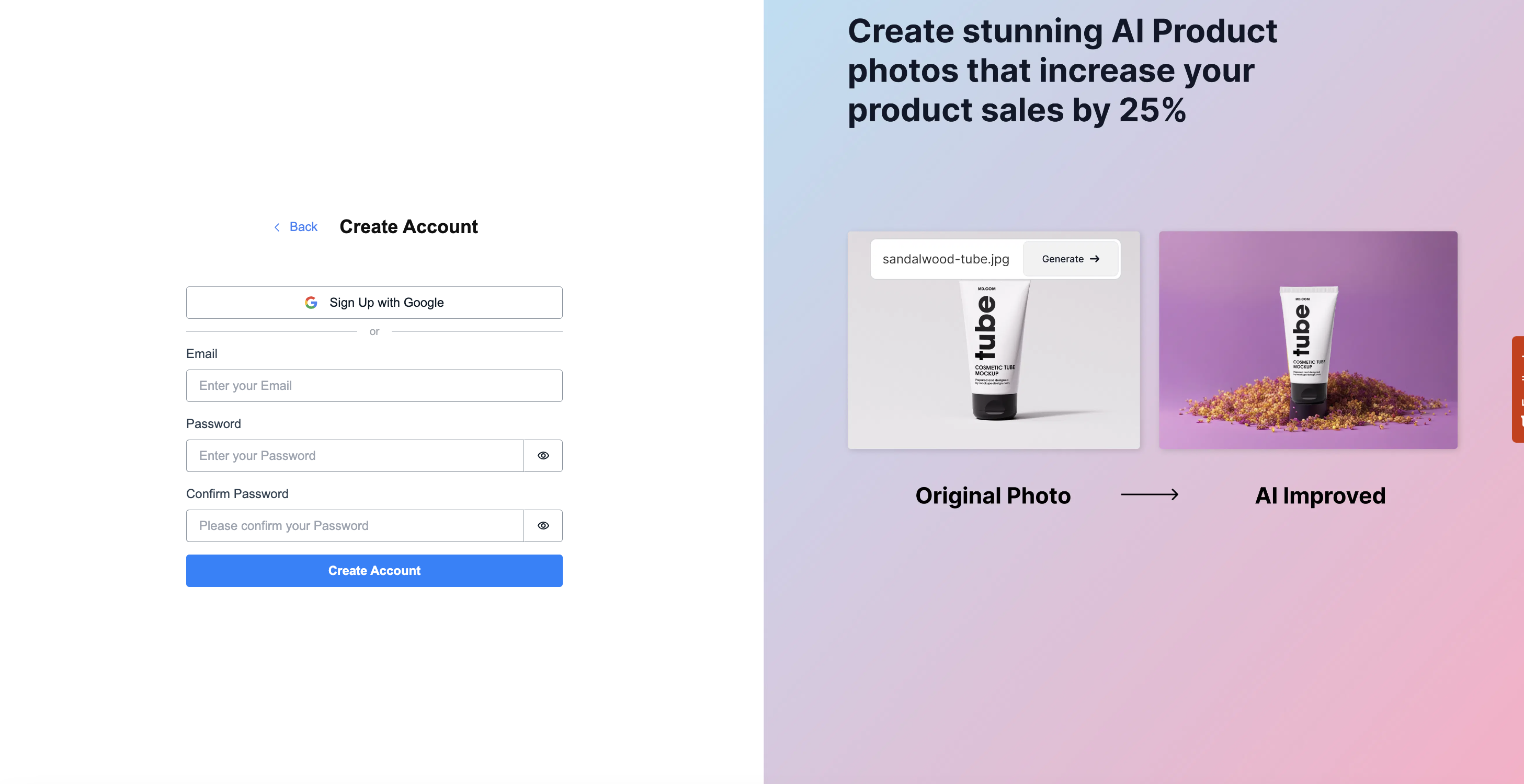
- Onboarding Optimization: Redesigned the signup and onboarding flow with progress indicators and contextual help. Focused on reducing cognitive load and setting clear user expectations at each step.
- Information Architecture: Organized complex features into a simplified IA, ensuring users could easily discover and navigate between template-based and custom AI generation options.
- Mobile-First Approach: Ensured all designs were responsive and optimized for mobile users, as analytics showed a large portion of traffic came from mobile devices.
Go-To-Market Strategy & Conversion Metrics
Google Ads for Market Validation:
- Implemented a strictly targeted keyword strategy to attract high-intent users.
- Used detailed funnel tracking to measure conversion from ad click → signup → paid user.
Conversion Flow:
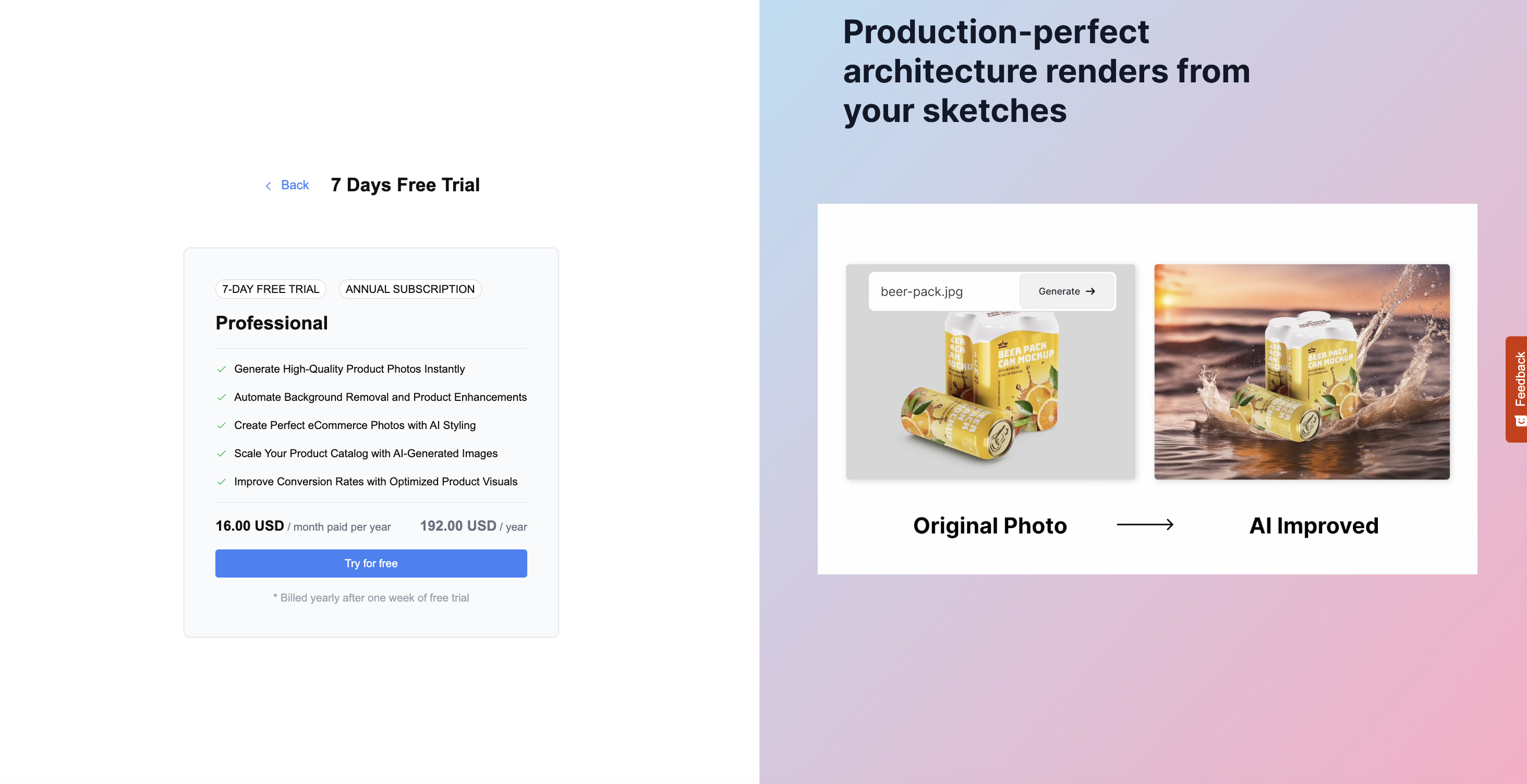
- Users were required to connect a credit card upon signup for a 10-day free trial.
- 4% of visitors signed up, but only 1.5% converted to a paid subscription.
- Despite a 40% revenue recovery on ad spend, further optimizations were needed to improve long-term retention.
Metrics Tracking in PostHog:
- Measured every step of the user flow, tracking which ad keywords led to the highest conversion rates.
- Identified which features users engaged with the most, guiding future product improvements.
📌 Key Results
- 4% conversion from paid ads to signups.
- 80% success rate in generating high-quality AI product images after introducing guided prompts.
- 1.5% conversion rate to paid plans, proving market willingness to pay, but highlighting a need for retention improvements.
- 40% marketing budget recovered in initial revenue, validating the business concept but requiring further refinements.
Key Learnings & Recommendations
Improve User Guidance Further:
- While templates and guided prompts significantly improved user success rates, further onboarding enhancements were needed to ensure users understood the full capabilities of the app.
AI Model Optimization:
- Enhancing AI prompt interpretation and image quality (potentially transitioning to Stable Diffusion) would increase user trust and subscription retention.
Refine Monetization Strategy:
- Consider alternative pricing models such as lower-cost monthly plans or usage-based pricing to improve retention and reduce cancellations.
My Contributions
- Led end-to-end product design, from concept validation to beta launch.
- Defined and executed Agile sprints, managing tasks in Jira across design, engineering, and marketing teams.
- Implemented user guidance improvements, introducing templates and real-time prompt assistance.
- Developed a data-driven iteration process, leveraging PostHog analytics and user interviews to optimize the product experience.
- Designed and measured a go-to-market strategy, ensuring data-backed decision-making for ad spend efficiency.
- Successfully validated a startup concept, proving real user willingness to pay for AI-powered eCommerce product images.
Final Outcome & Next Steps
This project successfully validated market interest in AI-powered product image generation. Despite strong initial engagement, long-term retention and monetization required further refinements.Next Steps
- Deepen AI functionality: Enhance model capabilities for higher-quality, more accurate image generation.
- Expand onboarding support: Introduce interactive onboarding to ensure users fully understand the product.
- Optimize pricing model: Experiment with alternative pricing structures to increase paid retention.
By leveraging user data, iterative testing, and Agile execution, this project demonstrated strong product-market potential and provided valuable insights for scaling the business.